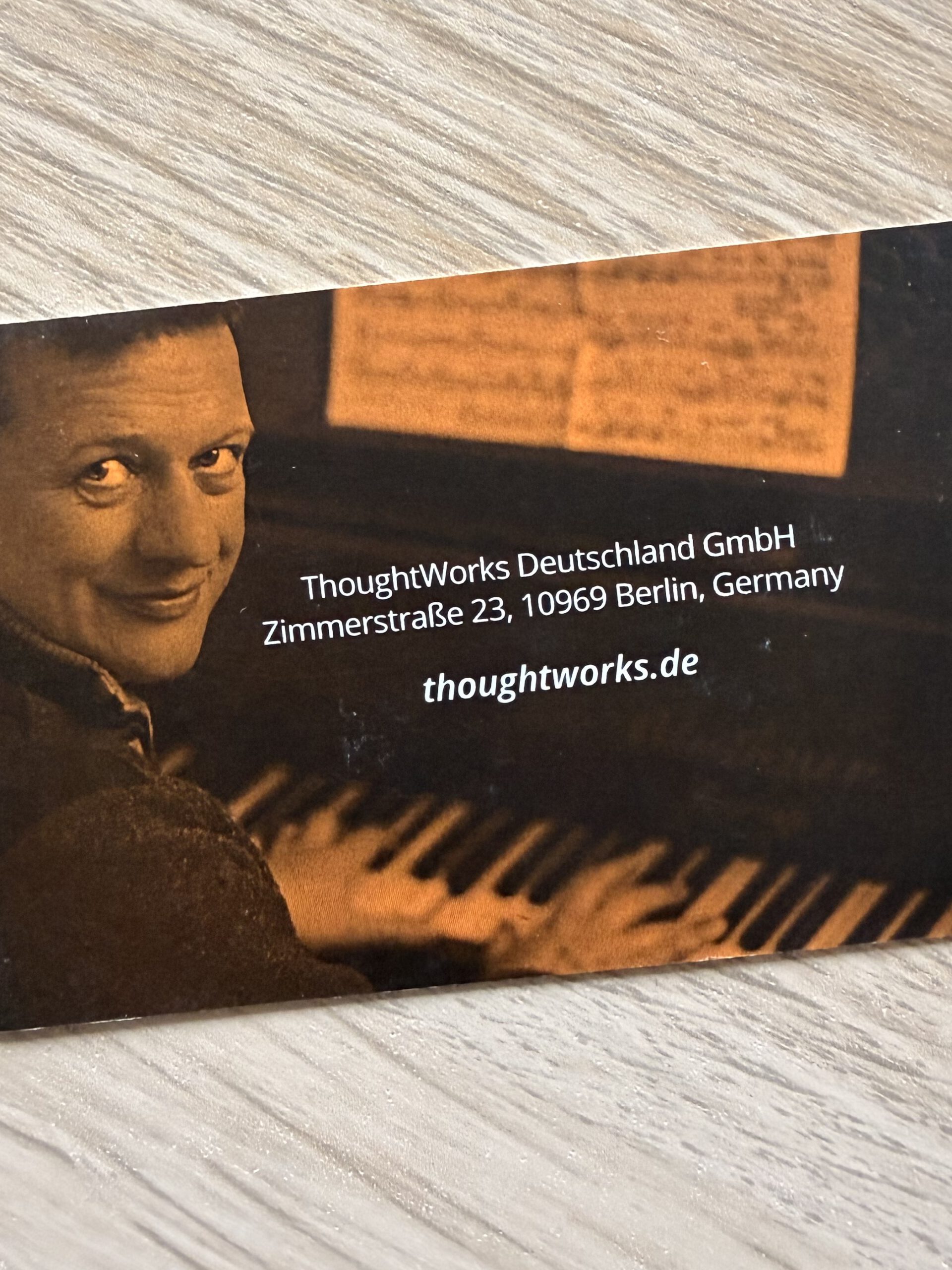
My business card has a photo of me playing jazz piano. People notice. They ask why.
I’m a bit of a jazz nerd, so that explains some of it. But there’s also a business reason.
It’s a quick shorthand I’ve found for how I think — for my mindset.
Jazz musicians listen before they play. Not as a courtesy — as a mindset. You find the space before you fill it. Miles Davis is often quoted on this: “Don’t play what’s there, play what’s not there.” And you’re not just listening for your own next note — you’re listening for what everyone around you needs.
Underneath that listening is something called groove. Not tempo — a metronome keeps tempo. Not harmony — that’s the chords. Groove is the shared pulse the whole group locks into together. In a client room, it’s the difference between work that feels transactional and work that actually moves.
That’s the part most meeting cultures train out of people. We show up with our answer ready. A jazz musician shows up open.
But listening alone isn’t enough — because you’re not playing alone. The other musicians are shaping what you do next. That’s harmony: not everyone playing the same thing, but everyone playing things that work together. What you do depends on what the person next to you is doing. The result is something none of you could have made on your own.
And when something unexpected happens — a wrong turn, a surprise from the room — you don’t stop. You play through it. That’s improvisation: rigorous preparation, played in response to what the room is actually giving you, not what you rehearsed for. It’s not winging it. The best client work I’ve been part of looked exactly like that.
Herbie Hancock told a story about a night playing with Davis when he hit what felt like a disastrously wrong chord mid-solo. Davis responded by playing notes that made it fit. Hancock later reflected: “Miles didn’t hear it as a mistake. He heard it as something that happened. As an event.” The band didn’t stop. They built on it.
That idea — the listening, the harmony, the groove, the shared thing you create together — has shaped how I think about client meetings, virtual or in person.
What does your business card say? I’m curious.