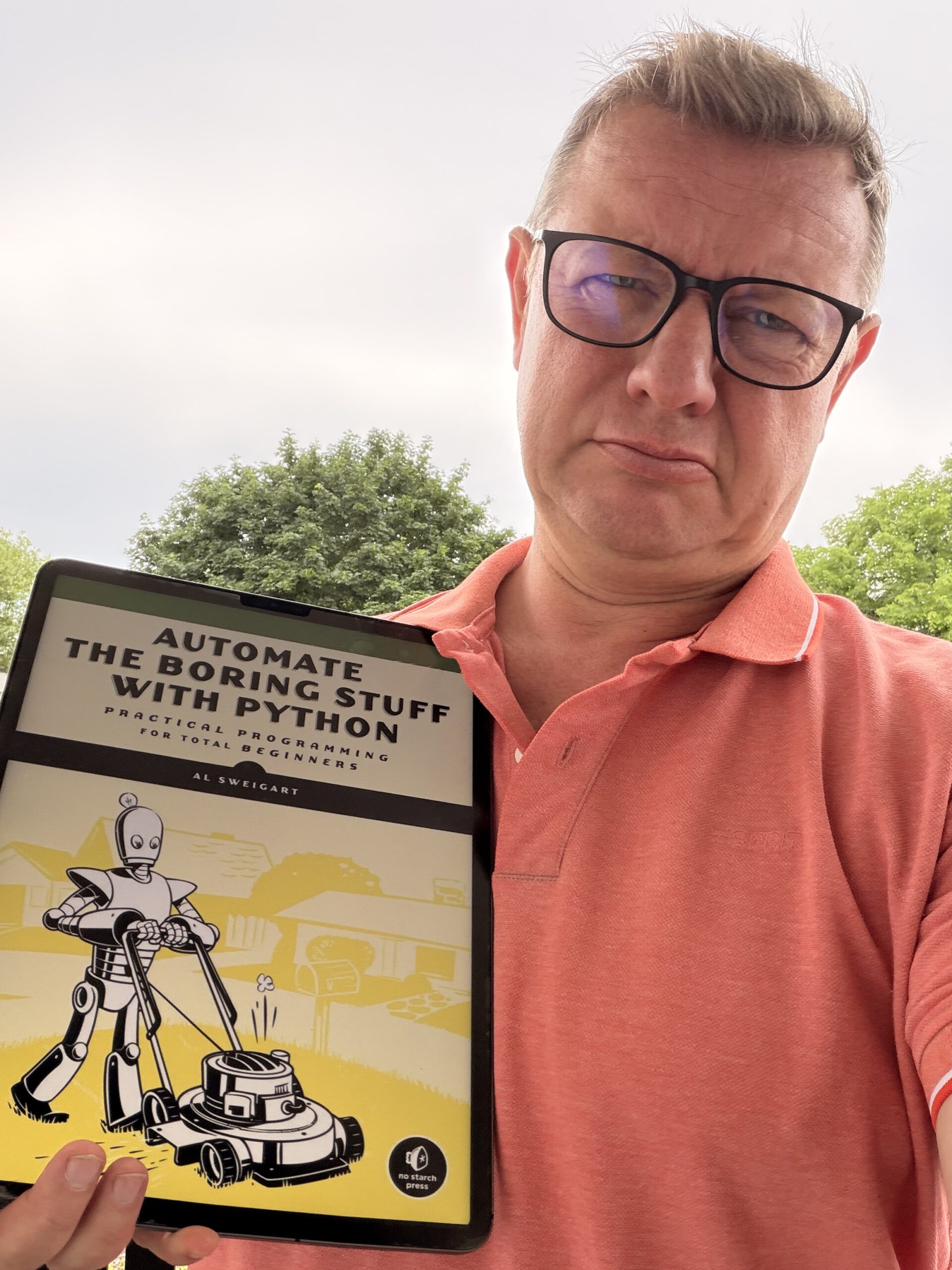
Years ago I bought a book called Automate the Boring Stuff with Python. I read most of it. I understood it. I never actually automated anything.
The book was fine. The problem was me.
I was a developer earlier in my career. I knew enough Python to follow every example — renaming and organizing thousands of files in one go, scraping a website instead of copy-pasting data by hand, bulk-processing Excel files or PDFs, filling forms automatically. The use cases were real. The payoff was obvious. And yet none of the scripts ever happened.
The honest reason: I had stepped away from daily coding. Getting fluent enough to actually build and debug a working script would have cost more time and mental energy than the task I was trying to automate. The ROI was negative. So the book sat on the shelf.
That changed when I started using ChatGPT and Gemini as coding co-pilots. I was still writing Python — but with help. The activation energy dropped enough to make some scripts worth finishing.
Then I started working with Claude Code. Now I don’t write the Python myself at all. I describe what I want. The AI builds it, iterates, fixes it when something breaks. The barrier is simply gone.
What I keep thinking about is this: the book’s promise was always correct. The bottleneck was never the tool, and it wasn’t willpower either. It was the cost of re-fluency for someone who had moved away from daily coding. AI removed that activation energy entirely.
Which means the constraint has shifted. The question is no longer “can you code well enough to automate this?” That question is gone. The question now is “do you have good enough judgment about what is actually worth automating?” That’s a thinking skill, not a technical one.
The tool was never the barrier. Knowing what to point it at — that’s the work that remains.
What boring task would you finally automate — now that coding fluency is off the table?