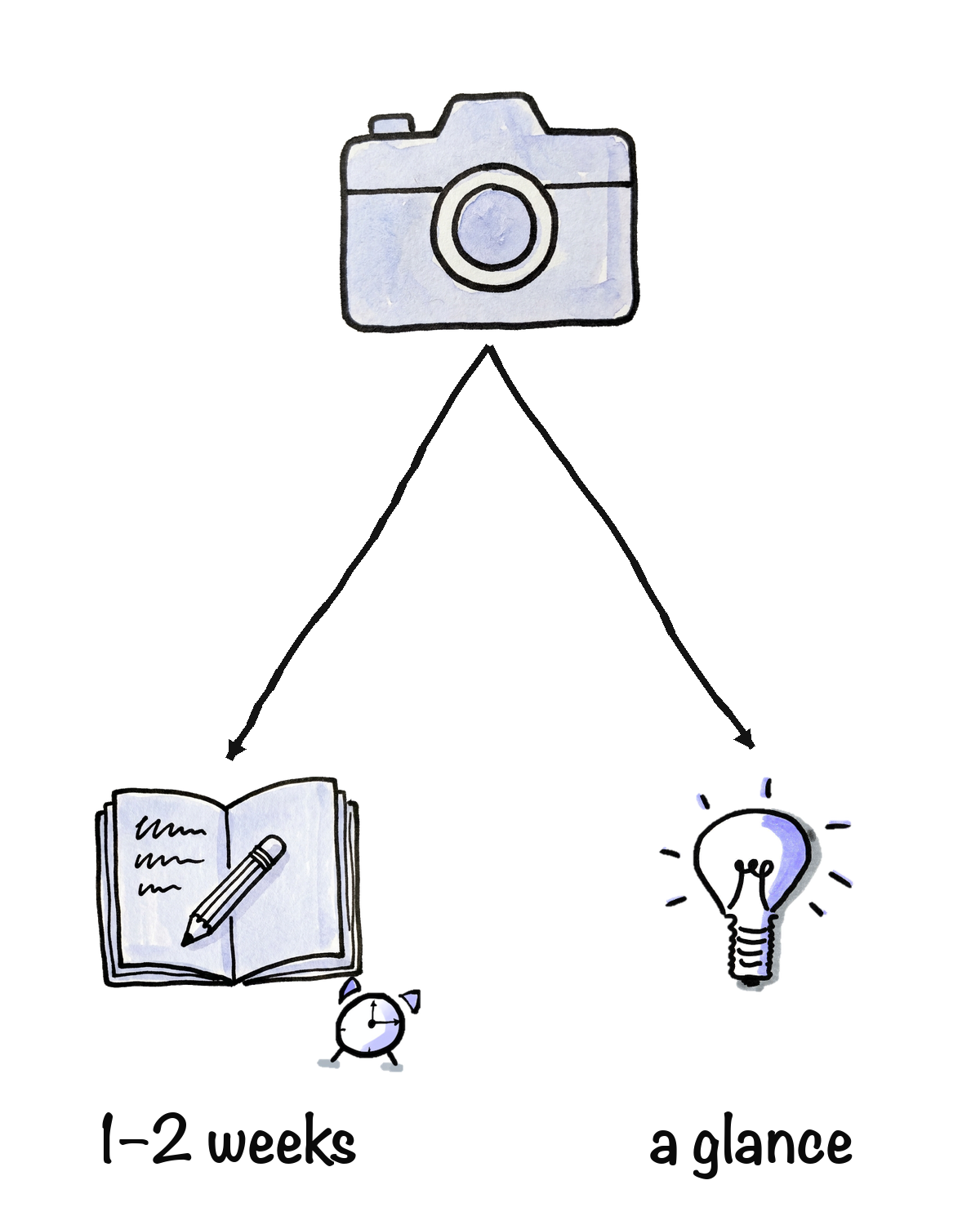
When I was about five, my parents gave me my first camera. My dad prepared a small booklet for writing down the key settings of every picture: aperture, distance, shutter speed.
I took my first pictures and logged everything carefully. Once the film was full, it took another one or two weeks to get it developed. Only then could I see what had worked and what hadn’t.
That feedback loop was slow. So was my progress.
Many years later, I bought myself a DSLR. Now I could see right away what aperture, focal length, and shutter speed actually do. I could try different flashes and lighting situations on the spot. The loop shrank from weeks to a glance at the display. It was a real joy to experience how quickly I got better.
I had a similar experience with music. I never imagined I would compose orchestral music myself. Then I installed several orchestral sample libraries and started experimenting: how an orchestra works, how individual voices sound together, what voice leading really does. With the help of YouTube videos and orchestration tools, I wrote my first orchestral pieces fairly quickly.
In both cases, digitalization didn’t do the learning for me. It shortened the time between trying something and seeing, or hearing, what it did. That, to me, is what makes it a learning accelerator.
The same logic sits behind short iterations in software development: the sooner a team sees the effect of a change, the sooner it learns.
Where has digitalization cut a feedback loop for you — and what did that do to how fast you learned?